Short answer: for most dealerships, not yet. AI shopping agents don't browse listing sites or dealer websites. They read dealership data directly and recommend the dealers whose inventory, pricing, and service data they can trust. Agent-ready data is current, complete, consistent, connected, and owned. Many dealerships fail more than one of those tests today.
The next car shopper won't start on your website. They'll start in an AI assistant.
They'll type or say something like: "Find me a certified Tahoe under 40,000 miles, under $48,000, within 60 miles, and tell me which one is the best deal." The assistant won't open a browser tab and scroll through search results pages. It will read inventory data from every dealer it can reach, compare it, and hand back three vehicles with a reason for each.
That changes what a dealership has to be good at online. For 25 years the job was to attract a human and keep them clicking. The new job is to be the source an AI agent trusts.
What is an AI shopping agent?
An AI shopping agent is an AI assistant that searches, compares, and qualifies products on a shopper's behalf. In automotive retail, that means reading inventory, price, equipment, and availability across many dealerships and returning a short list with reasons, without the shopper visiting a listing site or a dealer website. For background on how agents work inside the dealership itself, see What Is Agentic AI for Car Dealerships?
How do AI agents change car shopping?
Almost everything in dealership digital retail was built for a human who browses. Listing sites aggregate inventory because no person can check thousands of dealer websites. Dealer websites have search results pages, vehicle detail pages, filters, photo galleries, lead forms, and chat bubbles because a person has to click their way to an answer.
An AI agent has none of those limits. It can read every dealer's inventory at once. It doesn't need a destination, a search box, or a homepage. It needs structured answers to specific questions.
| Browsing era | Agent era | |
|---|---|---|
| Where the search starts | Search engine, listing site, or dealer website | AI assistant |
| Who compares vehicles | The shopper, tab by tab | The agent, in one answer |
| What the dealer competes on | Pages, rankings, and ad spend | Data accuracy and completeness |
| What the dealer pays for | Leads, listings, and clicks | Clean data, and possibly placement in AI answers |
| What gets a dealer skipped | Poor ranking | Stale, incomplete, or inconsistent data |
Will AI replace third party car listing sites?
The shift hits third party listing sites first. Their value is aggregation, comparison, and audience, and an agent does all three inside one answer. Some listing sites will adapt by selling data and pricing intelligence to the AI platforms. But a site the shopper never visits is no longer a listing site. It's a data supplier.
Will dealership websites disappear?
No. The dealer website follows the listing site, but it doesn't disappear. Its job changes. The browsing layer (pages built to rank, templates built to hold attention, forms built to capture a lead) matters less every year. What matters more is the data underneath it, plus the steps that still need a human or a regulated process: credit, F&I, signatures, and delivery.
What does an AI agent ask a dealership?
When an agent works on a shopper's behalf, it asks the same handful of questions over and over. Each one is answered by a different system inside the dealership.
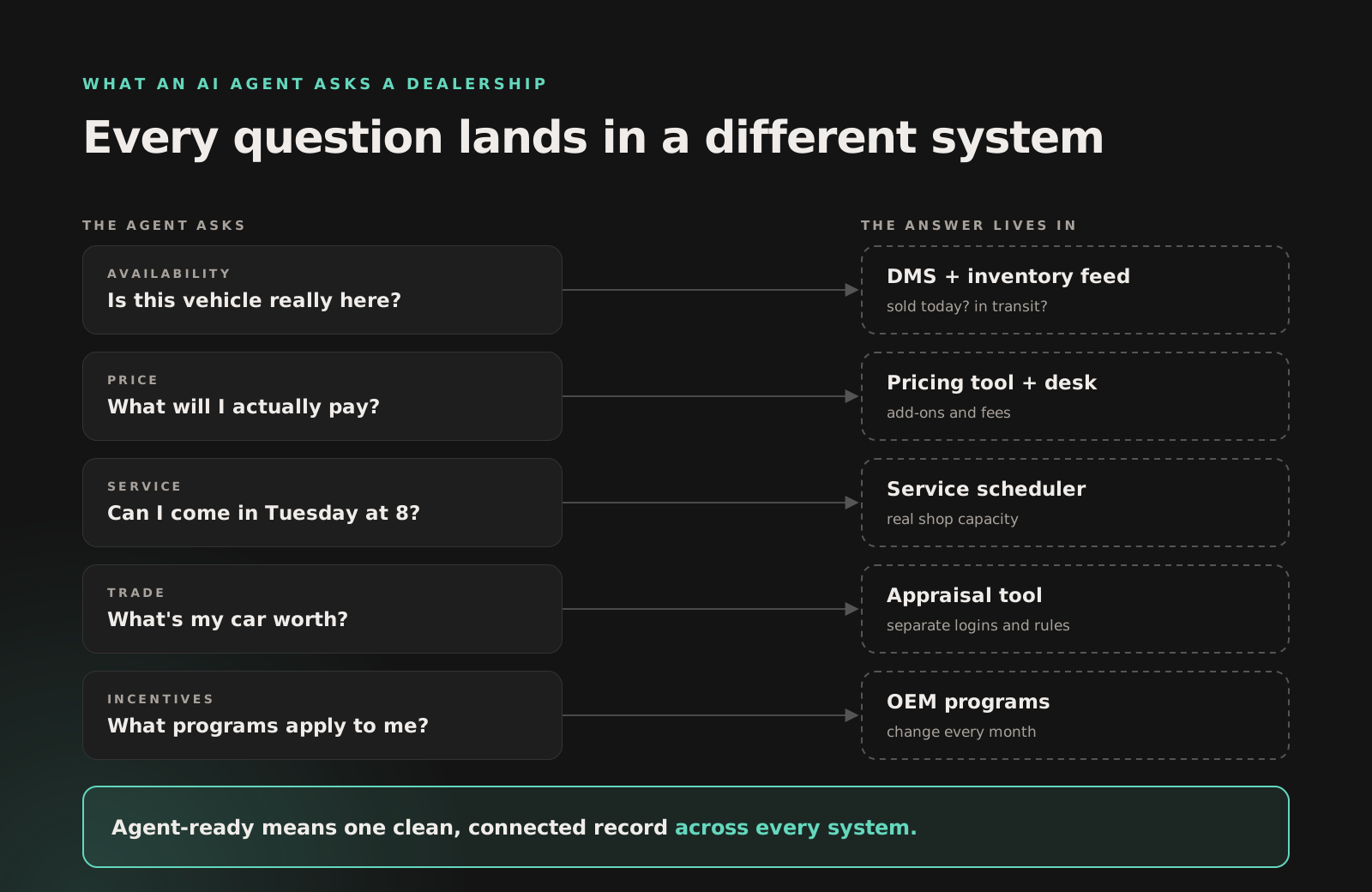
- Is this vehicle actually available? The answer lives in the DMS and the inventory feed, and it has to reflect units sold this morning and units in transit.
- What's the real price? Advertised price, dealer add-ons, and fees live in different places. Agents will compare out-the-door numbers.
- Can I get my car serviced Tuesday morning? Shop capacity and open appointment slots live in the service scheduler.
- What's my trade worth? Appraisal data lives in a separate tool, often with its own logins and rules.
- What incentives apply? OEM programs change monthly and rarely match what's on the website.
Today a human shopper patches these gaps by calling the dealership. An agent won't call. It will use whatever data it can read and move on to the next dealer if that data looks wrong.
Why isn't most dealership data agent-ready?
A single-rooftop dealership typically runs on 10 to 15 disconnected systems: a DMS, a CRM, an inventory tool, a pricing tool, a service scheduler, a website platform, a chat tool, a desking tool, and more. Each one holds a piece of the truth. None of them holds all of it. And the data keeps aging: customer email addresses decay about 2.5 percent a month and phone numbers about 25 percent a year, as covered in How Bad Is Data Decay, Really?
That fragmentation shows up in ways an agent notices immediately:
- A unit that sold three days ago is still live on the feed.
- The price on the website doesn't match the price on the listing site, which doesn't match the price at the desk.
- The same customer exists four times across the DMS and CRM with different emails and phone numbers.
- Service capacity isn't published anywhere a machine can read.
- Access to the dealer's own data runs through vendors who charge for it, limit it, or slow it down.
Pointing AI at raw, disconnected dealership data doesn't fix any of this. It just produces confident answers built on bad inputs, which is why AI on bad data is just fast bad decisions. Before AI can represent a dealership well, the data has to be pulled together, cleaned, and unified.
Why is data accuracy the new SEO?
Search engines rewarded the dealers who built the best pages. AI agents will reward the dealers whose data is right.
Agents learn. If an agent sends a shopper to a vehicle that's already gone, quotes a price that leaves out $2,400 in add-ons, or books a service slot that doesn't exist, it learns that the source is unreliable and stops recommending it. There's no page two to fall to. A dealer is either in the answer or not.
That's also why the gatekeeper question matters. If shopping moves inside AI assistants, the AI platforms become the new gate between the dealer and the customer. A dealer can't negotiate with that gate the way it negotiates a listing contract. The one thing a dealer can still control is data the gate has to trust.
What is agent-ready dealership data?
Agent-ready dealership data is inventory, pricing, service, and customer data that an AI agent can read and trust without a human checking it first. It passes five tests.
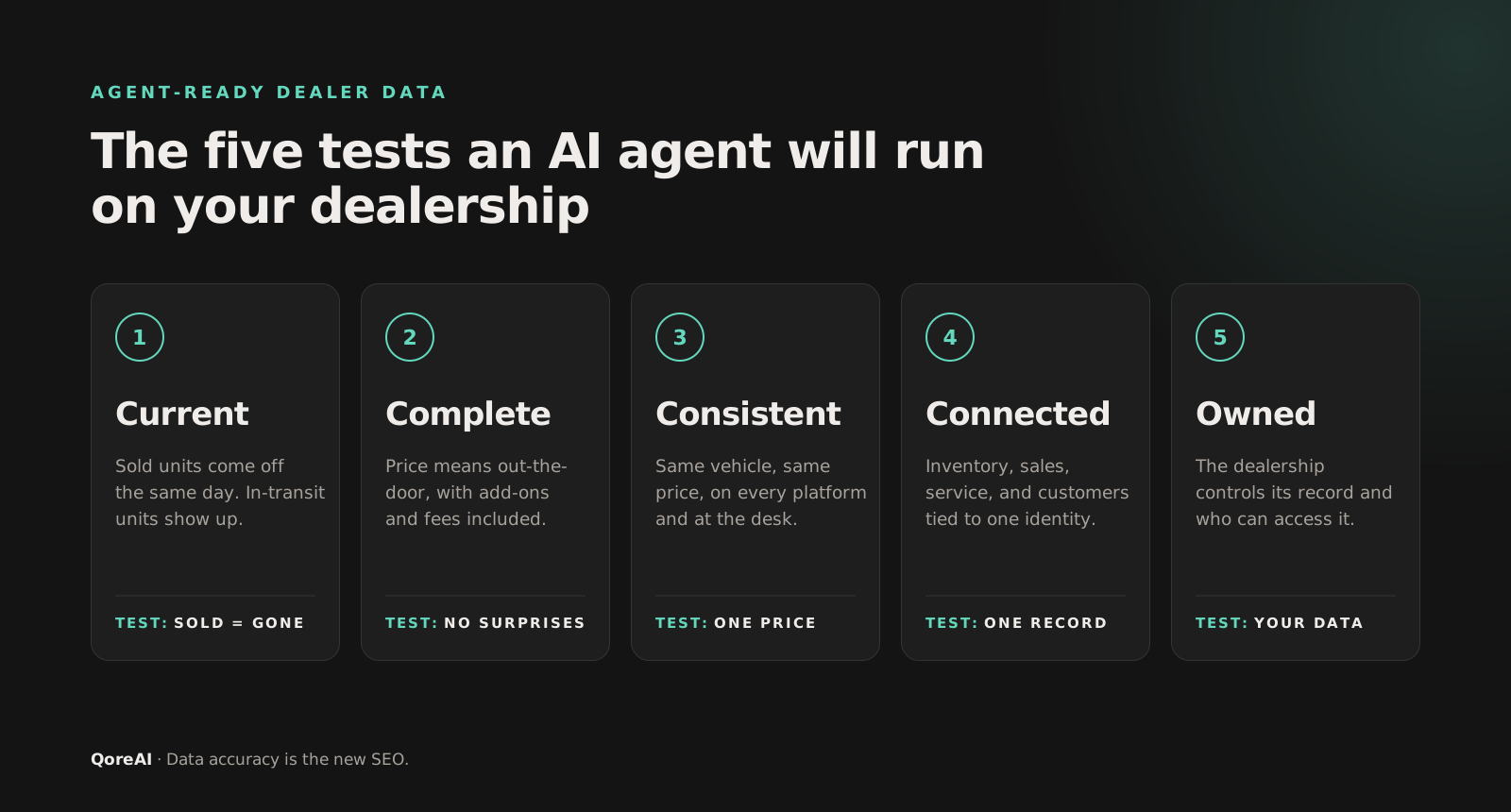
- Current. Sold units come off the same day. In-transit units show up. Service slots reflect the real schedule.
- Complete. Price means the out-the-door number, with add-ons and fees included, not just the advertised price.
- Consistent. The same vehicle carries the same price and details everywhere it appears: your site, every listing platform, and the desk.
- Connected. Inventory, sales, service, and customer records are tied together, so one customer and one vehicle each have one identity across every system.
- Owned. The dealership controls its own record and decides who can access it, instead of renting access to its own data from vendors.
A dealership that passes all five is ready to be represented by an AI agent. A dealership that fails two or three will be represented badly, or not at all. To see how much of your data you control today, try the Data Ownership Scorecard.
How can a dealership check if its data is agent-ready?
You don't need a new platform to find out where you stand. Pull 20 units at random and run this 20-minute audit:
- Is every unit actually on the ground or in transit, and are last week's sold units gone?
- Does the price on your website match your largest listing platform and the price at the desk?
- Would an out-the-door quote on each unit include add-ons and fees a shopper didn't expect?
- Could a machine find your next open service appointment without calling the store?
- If you asked each of your vendors for a full export of your own data today, how many would say yes?
Every "no" is a place where an AI agent will either get your dealership wrong or skip it. For a broader score across your whole operation, take the free AI Readiness Assessment.
Where QoreAI fits
QoreAI was built for this problem. QoreCloud connects a dealership's systems (DMS, CRM, inventory, service, and the reports and documents that live outside any API), then normalizes, deduplicates, cleans, and enriches that data. Everything is unified under a single QoreID, so each customer and each vehicle has one identity across the store. For the full approach, see How to Unify Dealership DMS, CRM and Service Data Into One Source of Truth.
The result is a clean, organized, dealer-owned version of all the dealership's data. That's the foundation a dealership's own AI tools need today, and it's the foundation outside AI agents will read tomorrow.
Frequently asked questions
What is an AI shopping agent for car buyers?
An AI shopping agent is an AI assistant that searches, compares, and qualifies vehicles on a shopper's behalf. It reads inventory, pricing, and availability across many dealerships and returns a short list with reasons, so the shopper does not need to visit a listing site or a dealer website.
Will AI replace third party car listing sites?
Not overnight, but their role will shrink. As shoppers start their search in AI assistants, agents read inventory directly and answer inside the conversation, so the shopper never visits the listing site. Some listing sites will survive by selling data and pricing intelligence to AI platforms rather than selling audience to dealers.
Will dealership websites disappear?
The website stays, but its job changes. The browsing layer built for humans, such as search results pages, vehicle detail pages, and lead forms, loses importance. The parts that matter more are accurate, machine-readable data and the transaction steps that still need a human or a regulated process, such as credit, F&I, and signatures.
What does agent-ready data mean for a car dealership?
It means an AI agent can read the dealership's inventory, pricing, service, and customer information and trust it. Agent-ready data is current, complete, consistent across every platform, connected across systems under one identity, and owned and controlled by the dealership.
How will AI shopping agents decide which dealer to recommend?
Agents will favor dealers whose data is accurate and complete. A dealer whose feed shows sold units, hides fees, or prices the same vehicle differently across platforms will be treated as unreliable and recommended less often.
What should a dealer do first to get ready for AI shopping agents?
Audit the data before buying any new AI tool. Check whether inventory is current, whether prices match across platforms, and whether the dealership can get full, timely access to its own data from every vendor. Clean, unified, dealer-owned data is the starting point for everything else.